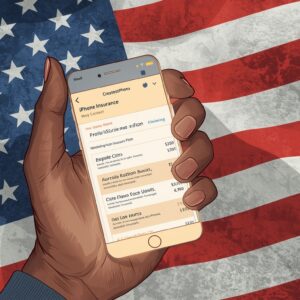
Let’s be honest—losing or breaking an iPhone in the USA feels like dropping your wallet, your camera, your diary, and your entire social life all at once.
One second you’re scrolling, texting, or watching funny cat videos… and the next second—slip!—your phone hits the ground like it just lost all hope in life.
Or worse… someone steals it. And suddenly you’re thinking:
“Why does the universe hate me and my wallet?”
That’s exactly where iPhone theft and damage insurance steps in. It’s like a safety net for your expensive little pocket computer.
In this guide, we’re going to break everything down in simple language, no confusing insurance jargon, and yes—just a bit of humor so it doesn’t feel like reading a law textbook.
What Is iPhone Theft and Damage Insurance?
iPhone insurance is a protection plan that helps you pay less (or nothing) when your phone gets:
- Stolen
- Dropped and cracked
- Water-damaged
- Or mysteriously destroyed by “accidents” (we all know it’s usually a drop on concrete)
Instead of paying $800–$1500 for a new iPhone, insurance helps reduce that cost to something more like a “painful but survivable” fee.
Think of it like a bodyguard for your phone—but one that only shows up after the damage is done.
Why iPhone Insurance Matters in the USA
The USA is one of the most expensive places to repair or replace an iPhone. Here’s why insurance becomes important:
1. Repair Costs Are Insanely High
A screen replacement alone can cost hundreds of dollars.
- iPhone screen repair: $200–$400+
- Back glass repair: $150–$600+
- Full replacement: Basically a small vacation’s worth of money
2. Theft Happens More Than You Think
Phones are stolen in:
- Cafes
- Public transport
- Gyms
- Busy streets
And no, yelling “Hey that’s mine!” rarely works like in movies.
3. Accidents Are Inevitable
Let’s admit it:
- Phones fall from beds
- Phones slip from hands
- Phones dive into toilets (RIP)
Insurance is basically saying: “We know you’re human. We’ve got you.”
Types of iPhone Insurance in the USA
Not all insurance is the same. In fact, choosing the wrong one is like buying shoes without checking the size—you’ll regret it quickly.
Here are the main types:
1. AppleCare+ (Apple’s Own Protection Plan)
This is Apple’s official insurance plan.
What it covers:
- Accidental damage
- Battery service
- Theft and loss (with extra plan)
Pros:
- Easy to use
- Genuine Apple repairs
- Trusted service
Cons:
- Monthly or upfront cost
- Not free (sadly, Apple doesn’t do charity… yet)
AppleCare+ is like the “VIP membership” of phone protection.
2. Carrier Insurance (Verizon, AT&T, T-Mobile)
Your mobile network provider often offers insurance plans.
What it covers:
- Theft
- Loss
- Damage
- Sometimes even same-day replacement
Pros:
- Convenient (added to your phone bill)
- Quick replacements
Cons:
- Deductibles can be high
- Claims process can feel like paperwork Olympics
3. Third-Party Insurance Companies
These are independent companies not tied to Apple or your carrier.
What they offer:
- Flexible plans
- Sometimes cheaper monthly fees
- Multi-device coverage
Pros:
- More options
- Can be budget-friendly
Cons:
- Quality varies
- Not always Apple-certified repairs
4. Credit Card Insurance (Hidden Bonus!)
Some credit cards offer phone protection if you pay your phone bill with them.
Pros:
- No extra monthly cost
- Built into your card benefits
Cons:
- Limited coverage
- Strict rules for claims
Many people don’t even know they already have this—like finding fries at the bottom of the bag.
What Does iPhone Insurance Usually Cover?
Most plans cover these situations:
✔ Accidental Damage
- Cracked screens
- Broken buttons
- Spilled drinks
✔ Theft
If someone steals your phone, insurance may replace it.
✔ Loss
Some premium plans also cover lost phones (yes, even “I swear I had it a minute ago” situations).
✔ Mechanical Issues
This is very important. Insurance is helpful, but not magical.
Most plans do NOT cover:
- Intentional damage (don’t test this… seriously)
- Cosmetic scratches that don’t affect performance
- Unauthorized repairs
- “I forgot where I put it for 3 months”
Insurance companies are helpful—but they are not fans of creative excuses.
How Much Does iPhone Insurance Cost in the USA?
Prices vary depending on the provider, but here’s a general idea:
AppleCare+
- Around $3.99–$14.99/month depending on model
- Theft & loss costs more
Carrier Insurance
- $7–$17/month typically
Third-party insurance
- $5–$15/month range
Deductibles (Important!)
Even with insurance, you usually pay:
- $29–$99 for screen repair
- $99–$269 for replacement
- Higher for theft claims
So yes, insurance is not “free phone forever,” but it saves you from huge losses.
Is iPhone Insurance Worth It? (Simple Answer: Yes… Most of the Time)
Let’s break it down simply.
You SHOULD get insurance if:
- You drop your phone often
- You travel a lot
- You use expensive iPhones (Pro models especially)
- You’ve already broken a phone before (be honest)
You MIGHT skip insurance if:
- You rarely drop your phone
- You always use strong protection cases
- You can afford full replacement easily
Think of insurance like a helmet:
You hope you don’t need it, but you’re glad it’s there when things go wrong.
Common Real-Life Scenarios (Where Insurance Saves the Day)
Scenario 1: The Slippery Hand Disaster
You’re texting while walking. Your phone slips. The screen turns into a spider web.
Insurance: “Don’t worry, we got this.”
Scenario 2: The Mystery Theft
You leave your phone on a table for 2 minutes. It disappears.
Insurance: “We’ve seen this movie before.”
Scenario 3: The Water Incident
Your phone meets a swimming pool, sink, or toilet.
Insurance: “Why does this keep happening to people?”
How to Choose the Best iPhone Insurance
Here’s a simple checklist:
✔ Check Monthly Cost
Don’t overpay for basic protection.
✔ Check Deductibles
Low monthly fee + high deductible = still expensive.
✔ Check Coverage
Make sure theft and loss are included if you need them.
✔ Check Repair Quality
Apple-certified repairs are usually safer.
✔ Check Claim Process
If it feels complicated, you’ll hate it later.
End of Part 1
This is the first half of your complete article.
In Part 2, I will cover:
- Best insurance companies in the USA
- Step-by-step claim process
- Common mistakes people make
- Tips to save money
- Final conclusion (very important)