Money. It’s something we all need — and often fret over — yet modern technology has turned many parts of managing money from a headache into something you can do with a thumbprint and a tap. Among the biggest drivers of that change in the USA is the iPhone, especially through services like Apple Pay. But Apple’s influence goes far beyond just contactless payments. In this article, we’ll explore how the iPhone has transformed finance in the USA, what Apple Pay and similar services do, and how everyday people interact with these technologies.
So grab a snack 🥨 and let’s jump into how the iPhone is shaping financial life… sometimes in surprisingly enjoyable ways.
1. A Quick Intro: What Is Apple Pay? (Not Just Fancy Wallet Glue)
Imagine you could ditch your wallet — no more digging for that one card you think you put in your jeans pocket. Apple Pay is like a digital wallet that lives in your iPhone (or Apple Watch), letting you pay for things with your device instead of a physical credit or debit card.
It works using a technology called NFC (Near Field Communication), which is basically a fancy way of saying “you get close enough → zap → payment done.”
Here’s how Apple Pay simplifies payments:
-
No physical card required
-
Secure: your card number isn’t shared with stores
-
Works in apps, on websites, and at registers
-
Uses biometric tools (Face ID, Touch ID) to confirm it’s really you
Let’s look at how Apple Pay compares to traditional wallets:
| Feature | Physical Wallet | Apple Pay |
|---|---|---|
| Need to carry cards | ✔️ Yes | ❌ No |
| Checkout with a tap | ❌ No | ✔️ Yes |
| Biometric security | ❌ No | ✔️ Yes |
| Works online | ❌ Only if typing card | ✔️ Yes |
| Risk of card swiping theft | ✔️ Yes | ❌ No (encrypted) |
So Apple Pay is like the superhero version of your wallet — still hiding in a dark corner of your bag, but doing most of the heavy lifting from your pocket.
2. The iPhone + Finance Combo: Not a Trend, But a Revolution
Once upon a time, “mobile finance” meant checking your bank account and sighing at your last debit card swipe. But with the rise of smartphones — especially the iPhone — a new world opened up.
2.1 The iPhone’s Financial Power Boost
The iPhone didn’t just introduce Apple Pay. It changed the way we handle money in lots of powerful ways:
-
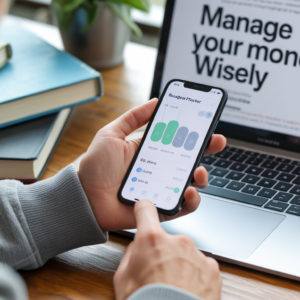
Mobile Banking Apps: Checking balances, transferring funds, and paying bills without physically visiting a bank.
-
Peer-to-Peer Payments: Sending money to friends in seconds (we’re looking at you, Venmo).
-
In-App Purchases: Buying things in apps without entering full card information.
-
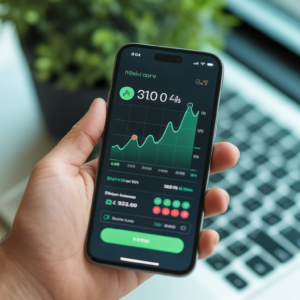
Budgeting Tools: Apps that help people save, track spending, and learn budgeting skills.
-
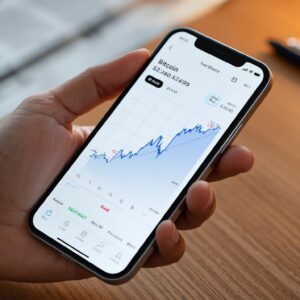
Investment Platforms: Apps that let people invest in stocks or crypto right from a phone.
If finance were a castle, Apple basically built an elevator straight to the top floor.
*3. Why Apple Pay Took Off: Simple, Secure, and Stylish
People didn’t adopt mobile payments overnight. Apple Pay succeeded because it solved real problems.
3.1 Easier Than Talking to Your Bank
Before Apple Pay, mobile payments existed, but most systems were clunky. Wallet apps that tried to store every card became confusing. Apple made it smooth:
-
Add a card with a few taps
-
Authenticate with a fingerprint or face scan
-
Tap your iPhone — and boom — payment complete
No need to remember card numbers or struggle with magnetic stripes. Even your grandma can do it (true story).
3.2 Security: The Invisible Guard
With Apple Pay, the actual card number is never stored on the phone or shared. Instead, Apple uses a device account number that’s unique and encrypted. That means:
-
Stores don’t see your real card number
-
If your phone is lost, your bank details aren’t easily exposed
-
You authenticate with Face ID or Touch ID
Think of it as having a super-secret vault in your pocket. 🗝️
4. How Apple Pay Changed Everyday Spending
Apple Pay didn’t just improve payments — it influenced behavior.
4.1 Faster Checkout = Happier Shoppers
Lines move faster, no more fumbling for cards or counting cash, and people feel like tech wizards. That small convenience has big impacts:
-
People buy more impulsively (oops 😅)
-
Stores can streamline checkout
-
Reduces wait times
Studies show shoppers like contactless payments more now than ever — especially after 2020. People prefer quick, touch-free checkout.
4.2 Budgeting Apps Get Better Together
Many financial apps sync with Apple Pay, making it easier to record expenses. This gives users a clearer picture of their spending habits. Instead of guessing where your paycheck went (unfortunately often toward snacks), you can actually see it in an app.
5. Beyond Apple Pay: The Bigger Finance World on iPhone
Like a video game that upgrades from “easy” to “legendary,” the iPhone’s role in finance expanded over time.
5.1 Mobile Banking Apps
Most banks now have apps — and many users rarely step foot in a branch. Banking tasks like depositing checks, paying bills, or checking balances are done from the phone.
Benefits include:
-
No branch visit needed
-
Real-time alerts
-
Easy money transfers
5.2 Peer-to-Peer Payments (P2P)
P2P apps let you send money instantly to friends and family — great for splitting bills or paying back someone who definitely owed you $5.
Here are popular ones often used on iPhones:
-
Apple Cash
-
Venmo
-
PayPal
-
Zelle
-
Cash App
P2P payments are often free between friends and super fast.
5.3 Investing From Your Couch (Or Bed)
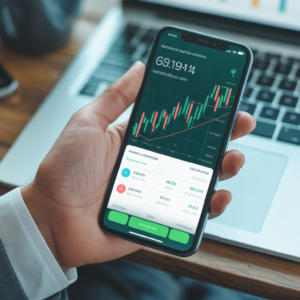
Investment apps like Robinhood and others let people buy stocks, ETFs, and even crypto from their phones. You no longer need a broker or complicated accounts — trading can happen in pajamas. (Not necessarily recommended for emotional investors… cough 😬).
6. iPhone Finance Security: Not Just Passwords and Peppermints
Security is a cornerstone of financial tech on the iPhone.
6.1 Face ID and Touch ID
Apple uses biometric systems that:
-
Replace typing long passwords
-
Make sure only you can authorize transactions
-
Are fast and (usually) accurate
This means that unless your twin has your face, fingerprint, and your phone, they’re not buying a jet ski with your money.
6.2 Tokenization: The Secret Sauce
In Apple Pay, your card isn’t stored on your phone. Instead, a token (a substitute number) is used.
Advantages:
-
Real card number never exposed
-
Even if intercepted, the token is useless to thieves
-
This reduces fraud risk significantly
7. The Impact on Retailers and Merchants
Apple Pay didn’t just change customers — it changed businesses too.
7.1 Faster Lines, More Sales
Stores that support Apple Pay handle payments quickly, which means:
-
Shorter queues
-
Happier customers
-
Higher sales potential
It’s like upgrading from walking through mud to gliding on a hoverboard.
7.2 Contactless Payments Increased During COVID
When the pandemic hit, contactless payments surged. People didn’t want to touch shared surfaces, and Apple Pay delivered a clean, tap-based method.
This contributed to a long-term shift toward contactless shopping in the USA.
8. Apple Pay in the Bigger Payment Ecosystem
Apple Pay isn’t the only kid on the block. There are alternatives like:
-
Google Pay
-
Samsung Pay
-
Retail-specific wallets
Here’s how they stack up:
| Feature | Apple Pay | Google Pay | Samsung Pay |
|---|---|---|---|
| Works on iPhone | ✔️ | ❌ | ❌ |
| Works on Android | ❌ | ✔️ | ✔️ |
| Biometric Security | ✔️ | ✔️ | ✔️ |
| Broad Retail Support | ✔️ | ✔️ | ✔️ |
| Tap + Swipe support (MST) | ❌ | ❌ | ✔️ |
Samsung Pay has a cool trick called MST (Magnetic Secure Transmission) that works at older card terminals — like the Land Before Time of tech.
But Apple Pay stays popular because it’s seamless and built directly into iPhones, which many Americans already use daily.
9. Challenges and Limitations
No technology is perfect. Apple Pay and iPhone finance systems have some drawbacks:
9.1 Not Every Store Accepts It (Yet)
Smaller shops or older systems may not support contactless payments. Sometimes you still need cash or card. Sorry, that taco truck.
9.2 Dependency on Technology
If your phone battery dies… welcome back to wallet-land! Always good to have a backup plan.
9.3 Security Concerns Still Exist
Even though Apple Pay is secure, fraud and scams can happen — especially when linked with other apps. Users still need to be careful with:
-
Phishing messages
-
Fake payment requests
-
Sharing sensitive info
10. What People Think: Real Reactions from Users (Not Robots)
Here’s a fun summary of how typical iPhone users feel about mobile finance:
10.1 Positive Vibes 😃
-
“I never carry my wallet anymore!”
-
“Checkout is so fast.”
-
“I feel fancy tapping my phone like James Bond.”
10.2 Not-So-Positive Grumbles 😅
-
“I still panic if my battery is low.”
-
“Sometimes stores don’t have contactless.”
-
“Why won’t this scanner read my half-awake face at 7 AM?”
Still, the overall trend is clear: most people prefer the convenience and security offered by Apple Pay and mobile finance.
11. The Future: Where Is iPhone Financial Tech Heading?
Apple isn’t done yet. The company and its partners are constantly working on improvements. Some things we might see more of:
11.1 More Integrated Banking Services
Apple has already hinted toward deeper banking tools — helping users save, spend, and manage money without leaving the phone.
11.2 Enhanced Digital ID and Wallet Features
What if your driver’s license, school ID, or passport lived inside your phone? Apple is exploring secure digital IDs.
11.3 Better Financial Insights With AI
Imagine your phone not just recording what you spend, but helping you make better financial choices — like a tiny, patient money coach in your pocket.
12. Final Thoughts: Why Apple Pay and iPhone Finance Matter
Apple Pay and similar technologies have reshaped how Americans interact with money. What was once a slow, paper-based routine is now fast, secure, and convenient. The iPhone didn’t just bring a new payment option — it helped usher in a broader shift toward digital finance.