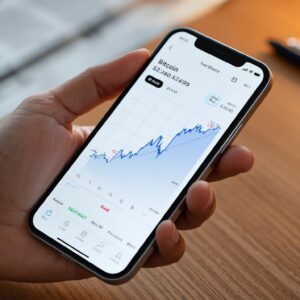
There was a time when financial advisors wore suits, sat in tall offices, and charged fees that made your wallet cry before they even said hello. Fast forward to today, and you might be surprised to hear this: your financial advisor could now fit in your pocket… next to your cracked screen protector and 37 unread notifications.
Yes, we are talking about the iPhone.
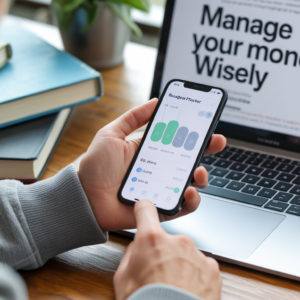
In the USA, where everything from coffee to car insurance can be handled through an app, the iPhone has quietly evolved into a personal finance hub. It doesn’t just make calls or scroll social media—it tracks your spending, suggests budgets, helps you invest, and even reminds you when you’re about to blow your paycheck on late-night online shopping.
But here’s the big question:
Can your iPhone actually replace a financial advisor?
Well… not exactly. But it can do a surprisingly good impression of one—like a student who studied really hard but still sometimes guesses the answer on a test.
Let’s break it down step by step in a simple, real-world way.
The Rise of the iPhone as a Money Manager in the USA
In the United States, personal finance has become deeply digital. Almost everything is connected to apps:
- Banking
- Credit cards
- Investing
- Budgeting
- Loans
- Taxes
And the iPhone sits right at the center of it all.
Instead of waiting for monthly statements in the mail (remember those days?), Americans now get:
- Real-time transaction alerts
- Spending breakdowns
- Credit score updates
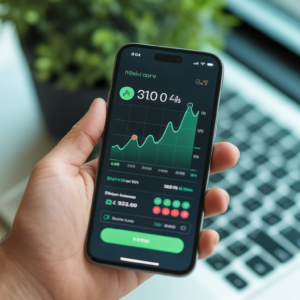
- Investment performance graphs that go up… and sometimes painfully down
The iPhone has essentially become a “financial dashboard” for everyday life.
And let’s be honest—most people check their phone more than they check their bank account. So the financial world followed the behavior.
Apple’s Built-In Financial Tools: More Powerful Than They Look
Apple didn’t just build a phone. It quietly built a mini financial assistant ecosystem.
Apple Wallet and Apple Pay
Apple Wallet is no longer just a place for plane tickets and concert passes. It’s your digital wallet.
With Apple Pay, users in the USA can:
- Pay in stores without cash or cards
- Send money through Messages
- Store credit and debit cards securely
- Track transactions instantly
It’s fast, simple, and dangerously convenient (because yes, spending money becomes too easy sometimes).
The Apple Stocks App
The Stocks app might look simple, but it’s a gateway into financial awareness.
Users can:
- Track S&P 500 performance
- Follow individual stocks like Apple, Tesla, or Amazon
- Watch market trends in real time
- Read financial news updates
Is it a full investment strategy tool? No.
But it’s like having a tiny Wall Street ticker in your pocket that whispers, “Hey… your portfolio is either doing great or emotionally ruining your day.”
Siri: The Underestimated Financial Assistant
Siri isn’t exactly a certified financial advisor, but she can help with:
- Currency conversions
- Basic financial questions
- Reminders for bill payments
- Quick calculations
You probably won’t ask Siri for retirement planning advice—but she’s great when you’re standing in a store asking, “How much is 20% off this overpriced jacket?”
Budgeting Apps: Where the iPhone Gets Serious About Your Money
This is where the iPhone really starts acting like a financial advisor.
In the USA, budgeting apps have exploded in popularity because people want answers to one simple question:
“Where did all my money go?”
The iPhone helps answer that.
Popular Budgeting Features
Most apps connected to iPhone can:
- Automatically categorize spending (food, rent, entertainment, etc.)
- Track monthly budgets
- Send overspending alerts
- Show spending trends over time
Why This Matters in Real Life
Let’s say you think you’re spending $200 a month on food.
Your iPhone might gently say:
“Actually… it’s $487. And yes, that includes 14 late-night taco orders.”
Ouch. But helpful.
Budgeting apps turn your phone into a mirror. Sometimes you like what you see. Sometimes… not so much.
Investing Apps: Your iPhone as a Tiny Stockbroker
Investing used to be intimidating. You needed brokers, paperwork, and a vocabulary that sounded like another language.
Now? You need an iPhone.
What Americans Use Their iPhones for Investing
With modern apps, users can:
- Buy and sell stocks instantly
- Invest in ETFs
- Trade cryptocurrency
- Set automatic investments
- Copy portfolios or follow trends
Everything is simplified into a few taps.
The Good Side
- Easy access for beginners
- Low entry barriers (you can invest with $1 in some apps)
- Educational tools built in
The Not-So-Good Side
- Easy access for beginners (yes, this is both good and bad)
- Emotional trading (“This stock dropped 2%, panic sell everything!”)
- Overconfidence after one lucky trade
Your iPhone makes investing feel like a game sometimes—but the money is very real.
So while it can guide you, it cannot replace human judgment or experience.
Banking Apps: Your Entire Bank in Your Pocket
In the USA, most banks now have fully functional apps, and the iPhone is their main gateway.
What You Can Do on Banking Apps
- Check balances instantly
- Transfer money between accounts
- Deposit checks using the camera
- Pay bills
- Freeze or unfreeze cards
- Track credit scores
This means your iPhone has basically replaced:
- Bank visits
- Paper checks (almost extinct now)
- ATM trips (mostly for cash lovers only)
Real-Life Example
Imagine this:
You’re lying in bed. It’s raining outside. You forgot to pay your electricity bill.
Old days: Panic, drive to bank, fill forms.
Now: Two taps on your iPhone. Done. Back to bed. Life continues.
That’s financial evolution.
Credit Score Tracking: The Silent Financial Teacher
In the USA, credit score is everything. It affects:
- Loans
- Credit cards
- Renting apartments
- Even job applications in some cases
Your iPhone now keeps track of it through apps.
What You See on Your Phone
- Current credit score
- Factors affecting it
- Payment history
- Credit utilization
Why This Is Powerful
Before smartphones, people ignored credit scores until it was too late.
Now, your phone gently reminds you:
“Hey, maybe stop maxing out your credit card on snacks and streaming subscriptions.”
It’s like having a strict but caring financial teacher who never sleeps.
The Role of AI and Smart Suggestions
Modern iPhones are increasingly powered by AI-driven insights. This makes them smarter about money habits.
Examples of Smart Suggestions
- “You spent 30% more on dining this month.”
- “You may want to increase your savings goal.”
- “Recurring subscription detected.”
- “Unusual spending activity noticed.”
These features make your phone feel like it is thinking about your money even when you are not.
Which is both impressive… and slightly terrifying.
Can the iPhone Replace a Human Financial Advisor?
Let’s get to the core question.
What iPhone Does Well
- Tracks spending in real time
- Gives instant access to financial data
- Helps beginners start investing
- Encourages budgeting habits
- Automates financial tasks
What It Cannot Do
- Build personalized long-term financial strategies
- Understand your life goals deeply (retirement, kids, emergencies)
- Provide emotional guidance during market crashes
- Navigate complex tax or legal planning
- Stop you from panic-selling during a recession
A human financial advisor is like a coach.
Your iPhone is like a fitness tracker.
Both are useful—but one shouts “run faster,” while the other says “maybe don’t skip leg day.”
Risks of Relying Too Much on Your iPhone for Finance
While everything sounds amazing so far, there are some real risks.
1. Overspending Made Too Easy
One tap payments = one dangerous habit.
You don’t feel money leaving your account. It just… disappears quietly.
2. Emotional Investing
Apps make trading so easy that people often:
- Buy impulsively
- Sell in panic
- Follow social media trends blindly
3. Data Overload
Too many charts, graphs, and alerts can confuse users instead of helping them.
4. Security Risks
Even though Apple is very secure, risks still exist:
- Phishing scams
- Weak passwords
- Stolen devices
Your phone is powerful—but also a target.
Why Americans Love Managing Money on iPhone
Despite risks, the trend keeps growing in the USA.
Why?
Because it is:
- Fast
- Simple
- Always available
- Easy to understand
- Connected to everything
In a busy American lifestyle, convenience wins almost every time.
People don’t want complicated spreadsheets. They want:
“Tell me how much I have… and don’t make me think too hard.”
The iPhone delivers exactly that.
The Future: Will iPhones Become Full Financial Advisors?
Looking ahead, things are getting even more interesting.
We might see:
- Smarter AI financial coaching
- Automatic investment balancing
- Real-time tax optimization
- Predictive spending warnings
- Fully personalized financial planning systems
Your iPhone could eventually say:
“Based on your habits, you should save $300 more this month and stop ordering dessert at 1 AM.”
And honestly… it might be right.
Final Thoughts: So, Can Your iPhone Be Your Financial Advisor?
The simple answer is:
Not completely—but it can get surprisingly close.
Your iPhone in the USA is already:
- Tracking your spending
- Helping you invest
- Managing your bank accounts
- Monitoring your credit score
- Giving financial suggestions